
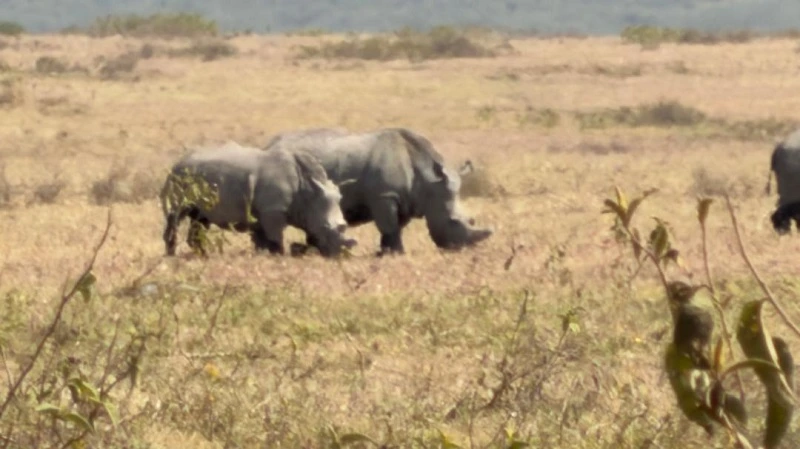
On the sun-drenched plains of Ol Pejeta Conservancy in Kenya, two females walk under 24-hour armed guard. Their names are Najin and Fatu. They are gentle, massive creatures, chewing peacefully on dry grasses. Yet, every step they take carries the weight of an entire subspecies.

Najin and Fatu are the last two Northern White Rhinos (Ceratotherium simum cottoni) left on planet Earth.
The story of the Northern White Rhino is one of the most poignant tales in modern conservation—a stark reminder of the devastating impact of illegal poaching, human conflict, and habitat destruction. But it is also becoming a story of miraculous scientific innovation, resilience, and hope.
If you are a lover of wildlife, a conscious traveler, or preparing for an epic East African expedition with Nature Expert Adventures, understanding the story of the Northern White Rhino offers a deep, meaningful context to the fragile ecosystems you are about to explore.
How Many Northern White Rhinos Are Left?
For millions of years, Northern White Rhinos roamed the grasslands and open savannahs of Central and East Africa, spanning across parts of Uganda, South Sudan, the Democratic Republic of Congo (DRC), and Chad. As recently as 1960, more than 2,000 Northern White Rhinos freely traversed these habitats.
Today, that wild population is completely gone.
In March 2018, the world mourned the death of Sudan, the last remaining male Northern White Rhino. Sudan’s passing rendered the subspecies functionally extinct, as neither of the two surviving females (Najin and her daughter Fatu) can carry a pregnancy naturally due to age and health complications.
| Key Fact | Details |
|---|---|
| Scientific Name | Ceratotherium simum cottoni |
| Wild Population | 0 (Extinct in the wild) |
| Total Living Population | 2 females (Najin & Fatu) |
| Location | Ol Pejeta Conservancy, Kenya |
| Protection Status | 24/7 Armed Guard Protection |
How Did We Get Here? The Poaching Crisis?
The catastrophic decline of the Northern White Rhino is almost entirely man-made.
During the 1970s and 1980s, rampant poaching fueled by the illegal international wildlife trade devastated wild herds. Rhino horn—composed simply of keratin, the same protein found in human hair and fingernails—is falsely believed in some traditional medicines to cure ailments, while also being valued as a status symbol or decorative dagger handle in parts of the world.
Civil unrest and armed conflicts across Central Africa during the late 20th century further compromised wildlife protection efforts, allowing heavily armed poaching syndicates to wipe out the remaining wild sanctuaries in places like Garamba National Park in the DRC.
By 2008, the Northern White Rhino was declared extinct in the wild.
Northern White Rhino vs. Southern White Rhino: Key Differences
It is easy to confuse the Northern White Rhino with its southern cousin. While both belong to the White Rhino species (Ceratotherium simum), genetic research shows they diverged over a million years ago.
Here is how they compare:
| Feature | Northern White Rhino (C. s. cottoni) | Southern White Rhino (C. s. simum) |
|---|---|---|
| Conservation Status | Functionally Extinct (2 left) | Near Threatened (~15,000–16,000 left) |
| Historical Range | Central & East Africa (DRC, South Sudan, Uganda, Chad) | Southern Africa (South Africa, Namibia, introduced in Kenya) |
| Physical Appearance | Slightly smaller, flatter back, hairier ear fringes | Slightly larger, pronounced back hump, less hair |
| Skull & Horn Shape | Shorter head, distinct horn curvature | Longer head, prominent anterior horn curve |
Fortunately, thanks to decades of strict protection, the Southern White Rhino has staged a miraculous recovery from fewer than 100 individuals in the late 19th century to around 16,000 today—proving that dedicated conservation can turn the tide.
Science Meets Survival: The BioRescue Mission

Because natural reproduction is no longer possible, an international team of scientists, veterinarians, and conservationists known as BioRescue is attempting a world-first scientific miracle: bringing a subspecies back from the brink of extinction through advanced assisted reproductive technology (ART).
How the Rescue Plan Works:
- Egg Harvesting: Scientists have successfully harvested unfertilized eggs (oocytes) from Fatu under safe, specialized anesthesia.
- IVF & Frozen Embryos: Using preserved semen collected from deceased males (including Sudan), scientists have successfully created over 30 viable Northern White Rhino embryos stored in liquid nitrogen.
- Surrogate Mothers: Because neither Najin nor Fatu can carry a calf, these embryos will be implanted into healthy Southern White Rhino surrogate mothers in Kenya.
In early 2024, the team achieved a historic breakthrough by successfully completing the world’s first embryo transfer in a Southern White Rhino, proving the concept works. The dream of seeing a newborn Northern White Rhino calf walking the African savannah once again is closer than ever before.
Exploring Beyond: Protecting East Africa’s Untouched Wilderness
The story of the Northern White Rhino highlights a crucial truth: protecting natural habitats before species reach the brink is our greatest responsibility.
At Nature Expert Adventures, we are passionate about taking travelers beyond standard tourist routes into Africa’s most pristine, authentic, and wild ecosystems. Experiencing these landscapes reminds us of the raw beauty worth fighting for.
If you want to experience East Africa at its most untamed, consider combining your safari with these extraordinary destinations:
- Trek the Sacred Mountain of God: Experience the dramatic, volcanic landscapes of Northern Tanzania by taking on a challenge at Mountain Oldonyo Lengai, an active volcano holy to the Maasai people, offering breathtaking views over the Rift Valley.
- Journey into Pure, Untouched Wilderness: For an authentic, remote safari experience away from all crowds, explore the vast, raw habitats of Katavi National Park in western Tanzania—home to huge pods of hippos, massive buffalo herds, and thriving lion pride populations living as nature intended.
How Responsible Safari Tourism Helps Protect Wildlife
You might wonder how visiting Africa on a safari contributes to wildlife conservation. The answer is simple: responsible tourism funds habitat protection.
When you travel with an eco-conscious operator like Nature Expert Adventures:
- Park Fees & Conservancy Funding: A significant portion of your tour cost goes directly toward park ranger salaries, anti-poaching patrols, and wildlife monitoring.
- Community Empowerment: Local communities receive direct economic benefits through employment, schools, and healthcare, transforming former poaching risks into dedicated wildlife guardians.
- Keeping Wilderness Viable: Eco-tourism gives land an economic value higher than agriculture or resource extraction, preserving critical migratory corridors for rhinos, elephants, and big cats.
How You Can Help Save Endangered Species
Even before you set foot in Africa, you can play an active role in wildlife protection:
- Say NO to Illegal Wildlife Products: Never purchase carved horn, ivory, or exotic animal skins.
- Support Conservation Organizations: Support entities like Ol Pejeta Conservancy, BioRescue, and the African Wildlife Foundation.
- Choose Ethical Travel Operators: Book your East African safaris with eco-minded travel companies that respect animal welfare and support local conservation efforts.
Experience the Magic of East Africa with Nature Expert Adventures
Seeing an endangered rhino standing against an African sunset is a soul-stirring memory that stays with you forever. Whether you dream of tracking Black Rhinos in the Ngorongoro Crater, witnessing the Great Migration across the Serengeti, or exploring remote sanctuaries, Nature Expert Adventures is ready to guide you.
Our expert local guides, custom safari vehicles, and handcrafted itineraries ensure your travel leaves a positive footprint on Africa’s wild places.
Contact Nature Expert Adventures today to begin planning your meaningful East African safari!
Safari FAQ & Travel Info: Guide to get all the answers you need before embarking on your journey.
* 📞 **Direct Call / WhatsApp: (255) 786- 443-466
📞 **Direct Call / WhatsApp: (255) 755- 241-554