
Why Ngorongoro Crater Belongs on Your First Tanzania Safari?
A Ngorongoro Crater safari is one of the most unforgettable wildlife experiences in Africa, especially for first-time visitors to Tanzania. Known for its dramatic volcanic landscape, dense wildlife populations, and breathtaking crater-floor game drives, Ngorongoro offers the rare feeling of entering a natural wildlife amphitheater filled with lions, elephants, buffalo, zebras, wildebeest, hippos, flamingos, and, with luck, the endangered black rhino.
Located in northern Tanzania, the crater is part of the larger Ngorongoro Conservation Area, a UNESCO-recognized landscape where wildlife, geology, culture, and human history come together in one extraordinary destination. For many travelers, Ngorongoro is the perfect introduction to safari because it offers excellent wildlife viewing within a relatively compact area, making it easier to see a wide variety of animals in a single day.
For guests planning a customized Tanzania safari, Nature Expert Adventures can help design an itinerary that includes Ngorongoro Crater, Serengeti National Park, Tarangire National Park, Lake Manyara, and other highlights of the northern safari circuit.
What Is Ngorongoro Crater?
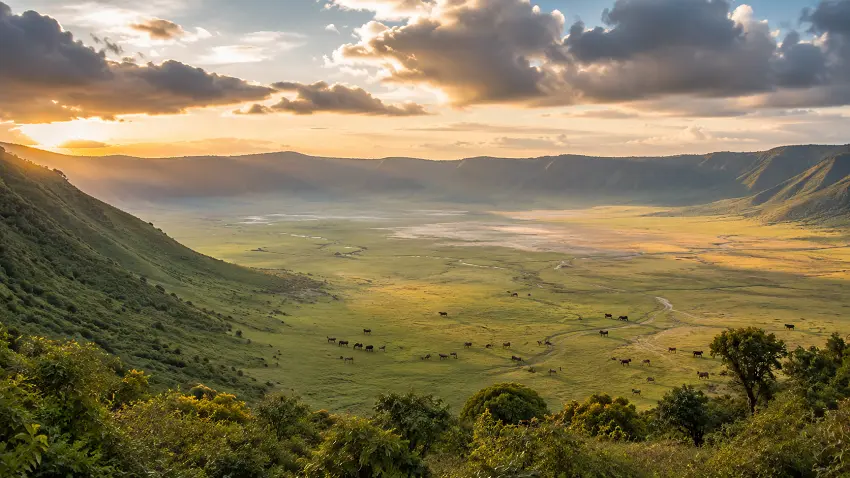
Ngorongoro Crater is the remains of a massive ancient volcano that collapsed millions of years ago, creating one of the world’s most spectacular natural calderas. Today, the crater floor forms a unique wildlife habitat of grasslands, wetlands, forests, soda lakes, and open plains. Because the crater walls rise dramatically around the floor, the landscape feels enclosed, cinematic, and remarkably different from the endless plains of the Serengeti.
The crater is located inside the Ngorongoro Conservation Area, one of Tanzania’s most famous safari destinations. The area is especially important because it combines wildlife conservation with cultural history, including the presence of Maasai communities and nearby archaeological sites such as Olduvai Gorge.
For first-time safari travelers, Ngorongoro is often one of the most rewarding places to visit because game viewing can be highly productive. The crater floor supports a wide variety of animals, and the scenery changes constantly as you drive from open grassland to acacia woodland, marshes, and lakeshore habitats.
Quick Facts of Ngorongoro Crater Safari Facts for First-Time Visitors
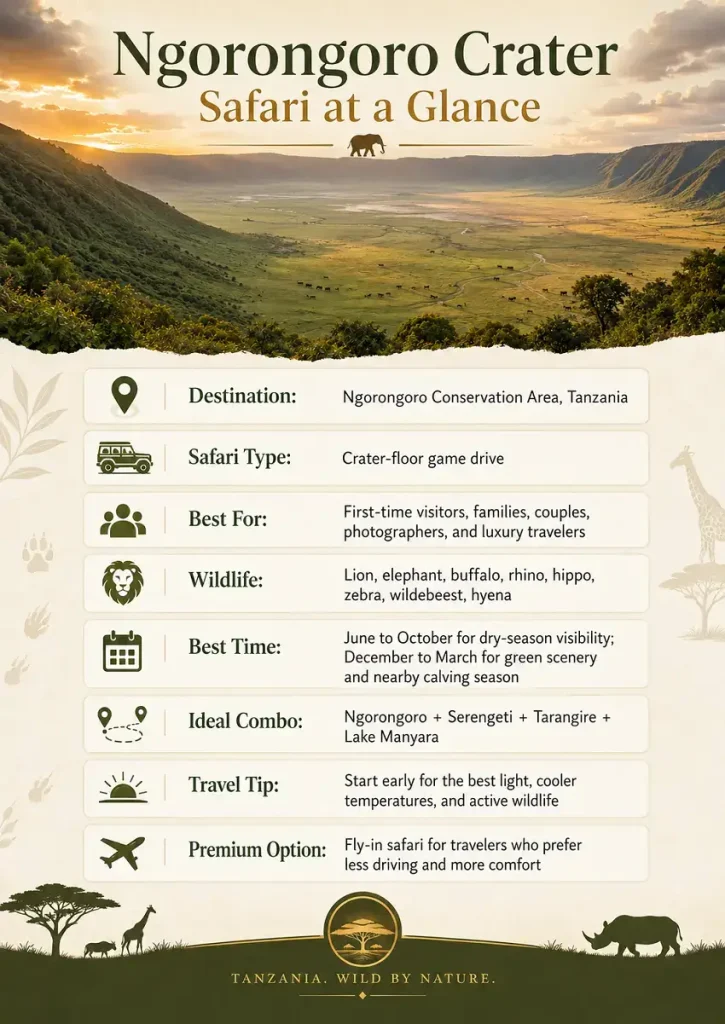
Best for: First-time safari travelers, wildlife lovers, photographers, families, couples, honeymooners, and travelers seeking Big Five sightings
Location: Northern Tanzania, within the Ngorongoro Conservation Area
Common safari route: Arusha, Tarangire, Lake Manyara, Ngorongoro Crater, Serengeti
Wildlife highlights: Lions, elephants, buffalo, black rhino, hippos, zebras, wildebeest, hyenas, jackals, flamingos, and many bird species
Best safari style: Private guided game drive with an experienced local safari guide
Recommended time: One full crater game drive, often combined with a multi-day northern Tanzania safari
Nearby destinations: Serengeti National Park, Tarangire National Park, Lake Manyara National Park, Karatu, Olduvai Gorge
Premium option: Fly-in safari for travelers who want to avoid long road journeys.
Why First-Time Visitors Love Ngorongoro Crater?
Ngorongoro Crater is ideal for first-time safari visitors because it delivers a powerful safari experience without requiring long distances between wildlife sightings. While every safari depends on nature, weather, timing, and animal movement, the crater is known for offering a high concentration of wildlife in a visually dramatic setting.
Many guests are surprised by how quickly the scenery changes. One moment, you may be watching zebras grazing in open grassland. A few minutes later, you may find lions resting near a track, hippos submerged in a pool, or elephants moving near the forest edge. The crater also provides one of the better opportunities in Tanzania to see black rhino, although sightings are never guaranteed.
For travelers who want a broader itinerary, Nature Expert Adventures offers several Tanzania safari packages that can combine Ngorongoro with Serengeti, Tarangire, Lake Manyara, and other destinations.
Wildlife You May See in Ngorongoro Crater
The wildlife experience is the heart of any Ngorongoro Crater safari. The crater floor is home to many of East Africa’s most iconic animals, including large predators, grazing herbivores, and wetland species.
Lions are among the most sought-after sightings. They are often seen resting in the grass, walking along safari tracks, or watching herds from a distance. Hyenas are also common and play an important role in the crater ecosystem. Jackals may be seen moving through the grasslands, while leopards are present but more elusive.
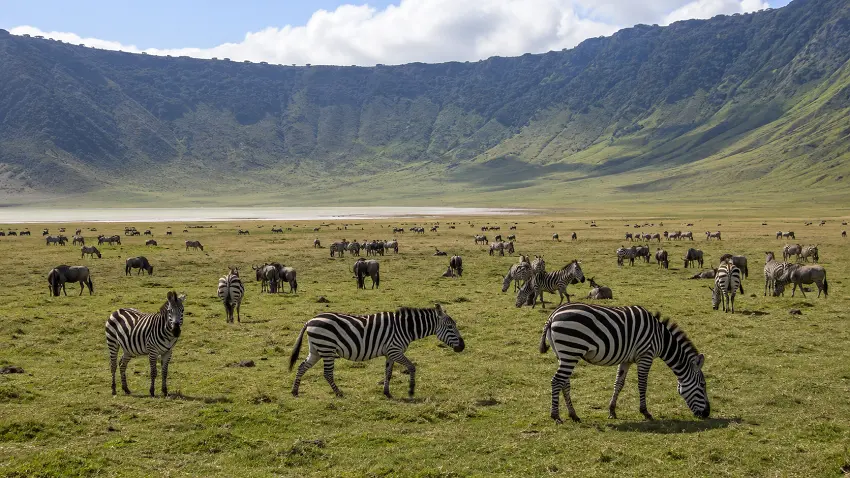
Large herbivores are usually abundant. Visitors may see wildebeest, zebras, buffalo, gazelles, elands, and warthogs. Elephants are often seen around woodland areas, especially mature bulls with impressive tusks. Hippos are usually found in pools and wetland areas, while flamingos and other birds may gather around the crater’s soda lake depending on water levels and season.
Although giraffes live in the wider Ngorongoro Conservation Area, they are not commonly found on the crater floor because of the steep descent and limited suitable access into the crater itself.
Can You See the Big Five in Ngorongoro Crater?
Yes, Ngorongoro Crater is one of the best places in Tanzania where travelers may have a chance to see the Big Five: lion, leopard, elephant, buffalo, and rhino. However, it is important to set realistic expectations. Lions, buffalo, and elephants are commonly seen, while black rhino sightings are possible but depend on timing, distance, and luck. Leopards are present in the broader area but are more difficult to spot inside the crater compared with some other safari destinations.
A well-planned itinerary improves your chances. Starting early, traveling with an experienced guide, and allowing enough time inside the crater all make a meaningful difference. This is one reason many travelers prefer a private safari with a knowledgeable local guide rather than a rushed group experience.
Best Time to Visit Ngorongoro Crater
Ngorongoro Crater can be visited year-round, but the experience changes by season.
The dry season, from June to October, is one of the most popular times to visit. Vegetation is thinner, roads are generally easier to navigate, and animals are often easier to spot around water sources. This is also a busy season, so travelers should book accommodations and safari permits early.
The green season, especially from November to May, offers lush scenery, dramatic skies, fewer crowds in some periods, and excellent photographic conditions. Birdlife can be especially rewarding during this time. The months from December to March can also be attractive for travelers combining Ngorongoro with the southern Serengeti and Ndutu area, where the wildebeest calving season often takes place.
April and May are typically wetter months. Some travelers avoid this period because of rain, but others enjoy the quieter atmosphere, green landscapes, and potential value in lodging.
How Many Days Do You Need for Ngorongoro Crater?
Most first-time visitors spend one full day exploring the crater floor. This usually includes an early descent, a morning game drive, a picnic lunch, and an afternoon game drive before returning to the crater rim, Karatu, or continuing toward the Serengeti.
However, Ngorongoro works best as part of a multi-day safari. A popular itinerary includes Tarangire, Lake Manyara, Ngorongoro Crater, and Serengeti National Park. This gives travelers a richer understanding of Tanzania’s ecosystems, from elephant-rich woodlands to open savannah and volcanic highlands.
For a shorter itinerary, Nature Expert Adventures’ safari packages can include Ngorongoro as part of a northern Tanzania wildlife experience. For travelers looking for a longer, more comfortable journey, a luxury family safari or custom private safari can include Ngorongoro, Serengeti, Tarangire, and other highlights.
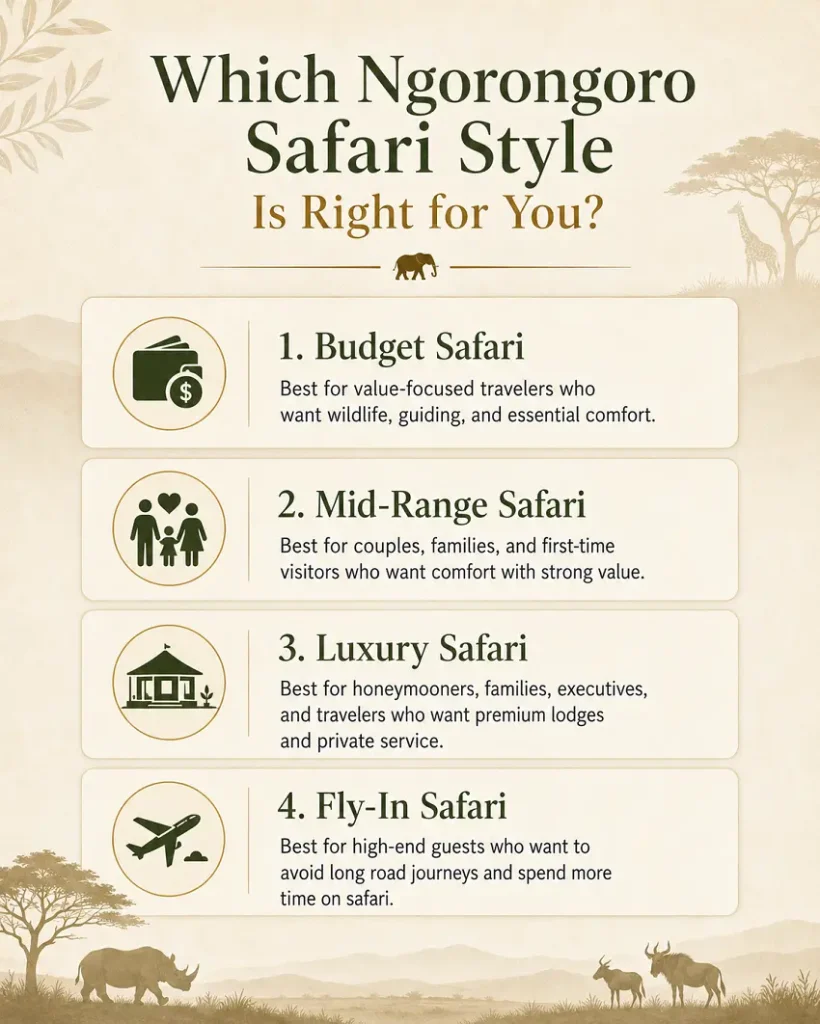
Ngorongoro Crater Safari Options: Budget, Mid-Range, Luxury, and Fly-In Safaris
Ngorongoro Crater Safari Options: Budget, Mid-Range, Luxury, and Fly-In Safaris
Choosing the right Ngorongoro Crater safari style is just as important as choosing the destination itself. Every traveler has different expectations. Some visitors want a simple and authentic safari at an accessible starting price. Others want a comfortable lodge-based journey, a luxury crater-rim experience, or a premium fly-in safari that avoids long road journeys.
Nature Expert Adventures can help travelers compare budget, mid-range, luxury, and fly-in safari options based on comfort level, travel season, accommodation preference, number of guests, and itinerary length. The pricing often depends on season, lodge category, group size, route, and included services.
What a Typical Ngorongoro Crater Safari Day Looks Like
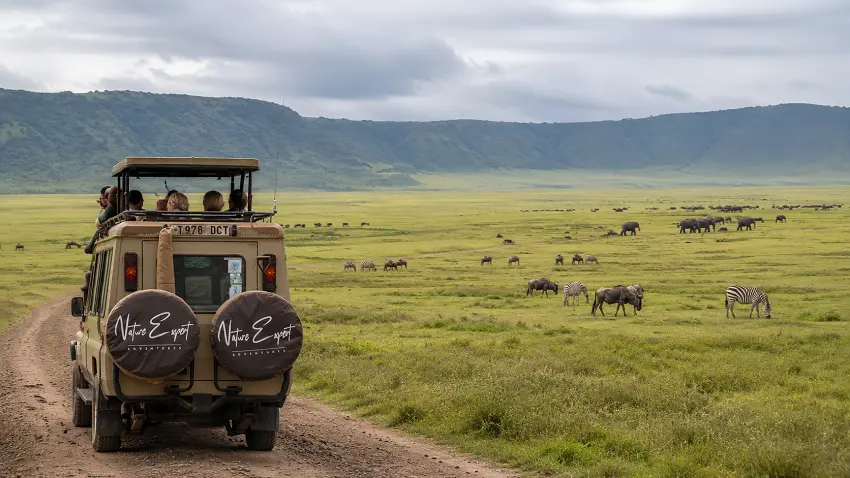
A typical Ngorongoro Crater safari begins early in the morning. Your guide will usually recommend leaving your lodge before or shortly after sunrise so you can reach the descent road when conditions are favorable. Early morning is often one of the best times for wildlife activity, cooler temperatures, and beautiful photography.
After descending into the crater, your game drive may begin across open grasslands where zebras, wildebeest, buffalo, and gazelles graze. Your guide will interpret animal behavior, track movement, communicate with other guides when appropriate, and position the vehicle respectfully for viewing and photography.
By midday, many safaris stop for a picnic lunch at a designated area. After lunch, the game drive continues through different habitats, such as wetlands, forest patches, and lakeshore areas. In the afternoon, your vehicle ascends the crater wall and returns to your lodge or continues to the next destination.
Because crater access and timing are regulated, it is important to travel with a licensed and experienced safari operator who understands the logistics.
Where to Stay Near Ngorongoro Crater?
Travelers usually stay either on the crater rim, in the wider conservation area, or in the nearby town of Karatu. Each option has advantages.
Crater rim lodges offer dramatic views and convenient access for early morning descents. They are often more expensive but can create a memorable once-in-a-lifetime experience. Lodges in Karatu can offer excellent comfort, beautiful highland scenery, and better value while still being close enough for a crater day trip. Some itineraries also include stays between Ngorongoro and Serengeti to make travel more efficient.
Your choice depends on budget, comfort level, travel style, and the overall route. A customized safari planner can help balance location, price, driving time, and wildlife goals. To discuss the best lodging approach, travelers can contact Nature Expert Adventures directly.
What to Pack for a Ngorongoro Crater Safari?
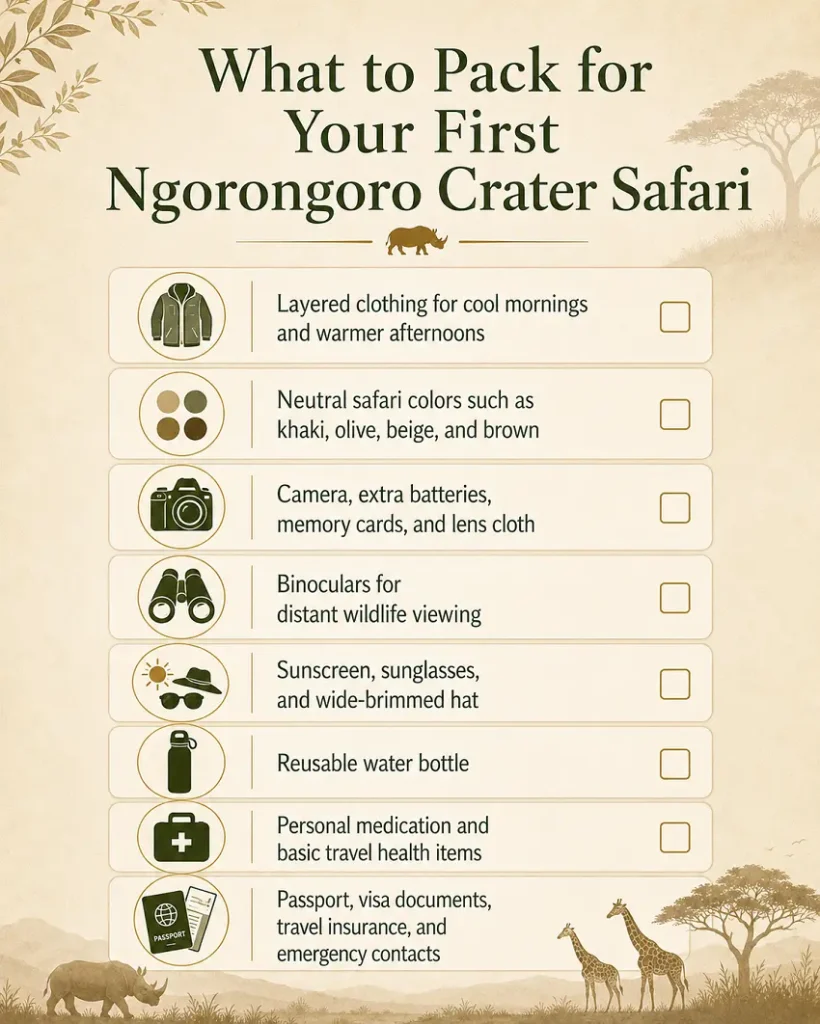
Packing well makes your Ngorongoro safari more comfortable. The crater rim can be cool, especially in the early morning, while the crater floor may become warmer later in the day. Layers are essential.
Bring neutral-colored clothing, a light jacket or fleece, comfortable shoes, sunglasses, sunscreen, insect repellent, a wide-brimmed hat, and any personal medication. For photography, bring extra batteries, memory cards, lens cloths, and a zoom lens if available. Binoculars are highly recommended, even if your guide has a pair, because they make distant rhino, birds, and predator sightings much more enjoyable.
Photography Tips for First-Time Safari Travelers
Ngorongoro is a dream destination for photography because the landscape is wide, layered, and filled with wildlife. Early morning light is often soft and dramatic, especially as mist lifts from the crater rim. A zoom lens is helpful for animals, while a wider lens is useful for landscapes.
The most important photography tip is to be patient. Not every moment needs to be rushed. Sometimes the best images happen when you quietly observe animal behavior and allow the scene to unfold. Listen to your guide, avoid loud noises, and never pressure wildlife for a photograph.
For phone photography, use burst mode for moving animals, clean your lens often, and avoid over-zooming. For camera users, a bean bag or vehicle support can help stabilize shots.
Safari Rules and Responsible Travel
Responsible safari behavior protects wildlife and improves the experience for everyone. Visitors should remain inside the vehicle unless the guide confirms it is safe and permitted to exit. Animals should never be fed, called, chased, or disturbed. Vehicles should remain on authorized tracks, and all litter must be carried out.
Travelers should also respect local communities and cultural heritage. The Ngorongoro landscape is not only a wildlife destination; it is also a place of deep cultural and historical significance. Choosing an ethical safari company, respecting guide instructions, and supporting responsible tourism all contribute to the long-term protection of this remarkable area.
For official conservation information, travelers can review the Ngorongoro Conservation Area Authority and the UNESCO Ngorongoro Conservation Area listing.
How to Get to Ngorongoro Crater?
Most Ngorongoro safaris begin in Arusha, the main gateway for northern Tanzania safaris. From Arusha, travelers usually drive toward Lake Manyara, Karatu, and the Ngorongoro highlands. The drive is scenic and can be combined with other parks along the northern circuit.
Some itineraries include flights between safari regions to reduce driving time, especially when combining Ngorongoro with the Serengeti. Many first-time visitors enjoy the overland route because it allows them to see villages, farms, highlands, and changing landscapes along the way. However, travelers who prefer a smoother and more time-efficient experience may choose a fly-in safari option.International travelers typically arrive through Kilimanjaro International Airport or Arusha Airport, depending on the route. Travelers should also review visa requirements through the official Tanzania eVisa portal before departure.
Ngorongoro Crater vs Serengeti: Which Is Better for First-Time Visitors?
Ngorongoro and Serengeti are very different, and the best answer is to visit both if time allows. Ngorongoro offers concentrated wildlife viewing in a dramatic volcanic setting. The Serengeti offers vast open plains, large-scale migration movement, big cat encounters, and a sense of endless wilderness.
For first-time visitors with limited time, Ngorongoro can deliver a powerful one-day safari experience. For travelers who want a deeper wildlife journey, combining Ngorongoro with Serengeti creates a more complete Tanzania safari. This combination is one of the most popular routes offered in northern Tanzania safari itineraries.
Common Mistakes First-Time Visitors Should Avoid
One common mistake is trying to rush Ngorongoro as a quick stop rather than giving it a proper safari day. Another mistake is arriving too late in the morning, when wildlife may be less active, and traffic can be heavier. Travelers should also avoid overpacking, wearing bright colors, forgetting warm layers, or relying only on a phone camera without binoculars.
Another major mistake is choosing an itinerary based only on price. The guide, vehicle quality, timing, lodging location, route design, inclusions, exclusions, and travel style can dramatically affect the safari experience. A knowledgeable local operator can help prevent wasted time and improve wildlife viewing opportunities.
Why Book Your Ngorongoro Safari with Nature Expert Adventures?
A Ngorongoro safari is more than a game drive. It is a carefully timed experience that depends on route planning, local knowledge, wildlife interpretation, and attention to comfort. Nature Expert Adventures specializes in Tanzania and designs private safari experiences based on each traveler’s goals, budget, comfort preferences, and available time.
Whether you are planning your first African safari, a family trip, a honeymoon, a photography-focused adventure, a luxury safari, or a fly-in itinerary, Nature Expert Adventures can help you build a journey that includes Ngorongoro Crater and other iconic destinations across the northern circuit. To begin planning, explore the company’s Tanzania safari packages or reach out through the contact page.

Conclusion: Ngorongoro Crater Safari Guide for First-Time Visitors
Ngorongoro Crater is one of those rare destinations that feels even more impressive in person than it does in photographs. For first-time visitors, it offers a remarkable combination of wildlife, scenery, geology, culture, and safari excitement. From the first descent into the crater to the final view from the rim, the experience is both peaceful and thrilling.
A successful Ngorongoro safari depends on good planning, expert guiding, realistic expectations, and the right itinerary. With Nature Expert Adventures, travelers can experience Ngorongoro as part of a carefully designed Tanzania safari that reflects their interests, comfort level, and sense of adventure.
Whether you prefer a budget safari, a mid-range safari, a luxury journey, or a premium fly-in safari, Nature Expert Adventures can help you choose the right option with clear starting prices, inclusions, exclusions, accommodation recommendations, and route planning.Ready to plan your first Ngorongoro Crater safari?
Start with Nature Expert Adventures’ Tanzania safari packages or contact the team to design a custom safari experience.